The landscape of American real estate is undergoing an unprecedented shift. Across the country, the volume of default notices, foreclosure filings, and distressed properties has created a unique window of economic transformation. For the average observer, headlines highlighting turbulent real estate cycles create hesitation. However, for elite real estate investment professionals, this volatility represents a generational opportunity to generate monumental profits.
When structural market corrections yield high numbers of foreclosures and short sales, they generate vast inventories of deeply discounted assets. Smart investors do not view these as signs of a collapsing system; instead, they treat these “lemons” as raw material to create financial “lemonade.”
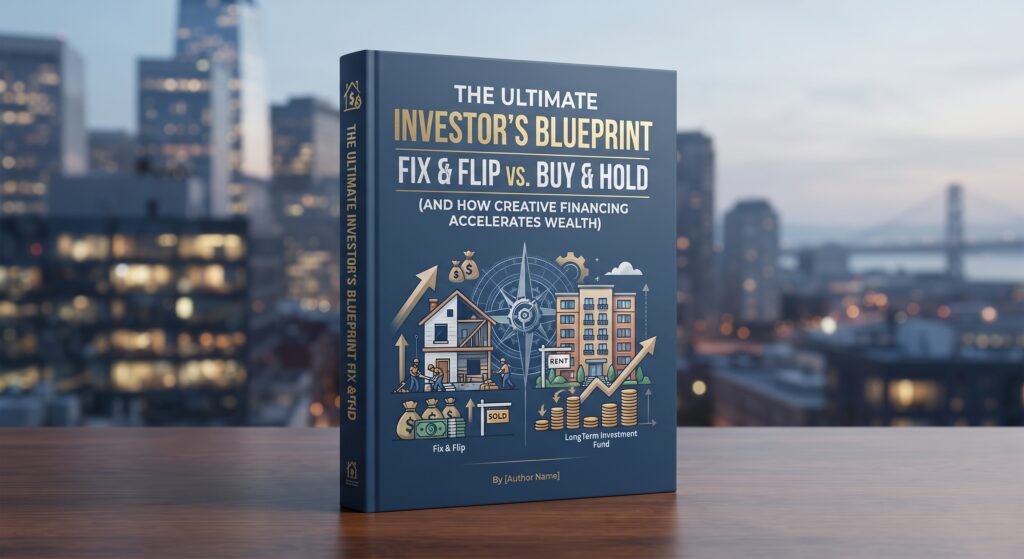
Success in this arena requires more than just identifying distressed assets. True wealth generation relies on how those assets are structured, scaled, and funded. Choosing between a traditional Fix & Flip execution or a long-term Fix & Keep rental strategy is a pivotal decision.
More importantly, your choice of financial partner directly dictates your trajectory. By moving away from traditional, restrictive banking structures and leveraging the specialized, creative financing solutions of an elite direct private lender like IndyBanc, investors can protect their liquidity, maximize their leverage, and safely scale a single asset into a multi-million-dollar real estate empire.
Deconstructing the Market: The Reality of Distressed Assets
When people hear the term “Fix & Flip” or “Buy & Hold,” they often picture single-family residential properties. While single-family residences are excellent foundational assets, a sophisticated investor understands that distressed debt and short-sale opportunities span the entire spectrum of real estate asset classes.
Through innovative financing models, any asset with clear structural upside and an attractive entry valuation can be acquired and repositioned. These asset profiles regularly include:
- Residential Portfolios: Single-family homes (1–4 units), townhouses, and suburban condominiums.
- Commercial and Multi-Family: High-density apartment complexes (5+ units), student housing, and mixed-use commercial properties.
- Hospitality and Luxury Properties: Boutique hotels, high-rise luxury towers, master-planned resorts, and premier golf courses.
- Specialty Capital Assets: Any complex investment property or cash-flowing operational asset that features an advantageous risk-adjusted margin.
The core mechanics of the business remain consistent across all property types: acquire an undervalued property, systematically eliminate its physical or operational deficiencies, and execute an optimized exit strategy that extracts maximum value.
Private Money vs. Traditional Institutional Lending
To understand why sophisticated investors achieve rapid growth, one must examine the capital structures that fund their portfolios. Relying on traditional institutional banks for active real estate investments is fundamentally inefficient. Traditional banks operate on standard, slow underwriting timelines, demand exhaustive income verifications, and enforce highly restrictive loan-to-value limitations. In a fast-moving market where the most lucrative deals close in a matter of days, waiting 45 to 60 days for a conventional bank approval will cause you to lose high-margin opportunities to more agile buyers.
Private institutional money, by contrast, represents the highest standard of strategic real estate capital. It treats money as a dynamic tool for leverage rather than an anchor of debt.
Short-Term Capital Solutions
For active rehabilitation projects, short-term private loans provide the velocity and flexibility required to execute rapid transitions. With interest rates ranging between 6.49% and 12% and terms spanning 12 to 18 months, this funding mechanism prioritizes speed and asset value over a borrower’s historical paperwork. It allows investors to access capital quickly, secure properties below market value, complete extensive renovations, and position the asset for a premium exit before the loan reaches maturity.
Long-Term Stabilization Capital
For investors pursuing a legacy wealth strategy, the goal shifts from short-term liquidation to long-term cash flow generation. Private financing accommodates this transition smoothly. Fixed 30-year loans are available for Buy, Fix & Keep rental strategies with rates starting as low as 6%. This allows you to smoothly transition from a high-velocity rehab structure into a stabilized, long-term cash-flowing mortgage, preserving your personal capital while building significant equity.
The Strategic Advantage of IndyBanc: Engineering Wealth Through Creative Financing
Many private lenders act as simple transactional funding sources, charging capital fees without adding strategic value to the transaction. IndyBanc operates differently, serving as a dedicated institutional partner focused on maximizing investor wealth. By utilizing advanced underwriting mechanics and asset-based strategies, IndyBanc changes how investors structure their transactions, turning financing into a primary driver of investment profitability.
- Traditional Financing: Slow approvals $\rightarrow$ Capital tied down $\rightarrow$ Rigid limits $\rightarrow$ Linear growth
- IndyBanc Financing: Rapid Proof of Funds $\rightarrow$ High leverage $\rightarrow$ Cross-collateralization $\rightarrow$ Geometric scaling
1. Advanced Leverage Optimization (Maximizing the Capital Stack)
The primary constraint on real estate growth is the exhaustion of liquid cash reserves. If an investor injects all of their personal liquid capital into a single property, their growth stops immediately until that asset is sold or refinanced. IndyBanc eliminates this barrier through optimized capital structuring. By funding up to 90% of the property acquisition costs and 100% of the renovation budget, IndyBanc reduces your required initial cash investment. This keeps your capital highly liquid, allowing you to deploy resources across multiple concurrent projects and scale your business exponentially.
2. Strategic Cross-Collateralization
For active investors with existing real estate portfolios, IndyBanc unlocks dormant capital through tailored cross-collateralization strategies. If you own equity in a stabilized commercial asset or a portfolio of rental properties, IndyBanc can structure financing that uses that equity to secure new acquisitions. This creative approach can allow you to achieve 100% financing on new acquisitions, completely eliminating the need for out-of-pocket down payments. This framework lets you build your portfolio continuously by leveraging your existing holdings without triggering taxable liquidation events.
3. Professional Negotiation with Sellers and Financial Institutions
IndyBanc’s involvement extends far beyond providing capital; the firm acts as a powerful ally during complex transaction negotiations. When you are acquiring assets out of foreclosure, navigating delicate short sales, or purchasing properties from distressed asset managers, having a seasoned, highly capitalized financial partner fundamentally shifts the power dynamic in your favor.
- Lender-to-Lender Negotiation: In short-sale and bank-owned (REO) transactions, IndyBanc’s underwriting team interfaces directly with the selling institution’s asset managers. Because IndyBanc deeply understands institutional debt structures, they can present concrete asset evaluations and verified capital commitments that convince selling banks to discount principal balances, waive outstanding fees, and clear complex liens to expedite the sale.
- Seller Concessions and Terms Optimization: When negotiating with private sellers, an IndyBanc approval completely changes your positioning. Sellers often prioritize certainty of closing over the final sales price. By providing a verified, institutional “Proof of Funds” and demonstrating an accelerated closing timeframe, IndyBanc gives you the leverage to demand substantial price discounts, seller-paid closing costs, or favorable repair credits during escrow.
4. Custom Transitional Bridge Financing
Real estate opportunities rarely arrive in neat, simple packages. Investors frequently encounter properties that are deeply undervalued but suffer from temporary operational issues—such as structural code violations, high vacancy rates, or missing certificates of occupancy. These issues make the property ineligible for standard bank funding. IndyBanc specializes in structuring custom bridge solutions designed to cross these gaps. This transitional capital funds the property through its immediate crisis, providing the necessary runway to stabilize the asset and qualify it for premium long-term institutional financing.
The Master Blueprint: 4 Phases to Investment Mastery
Achieving elite returns in real estate requires a systematic, repeatable approach to managing risk and executing projects. Elite investors follow a rigorous four-phase framework to consistently manufacture equity across every transaction.
Phase 1: Institutional Sourcing and Strict Due Diligence
Locating a deeply discounted property is only the first step. True investment mastery requires an exhaustive evaluation of data to ensure the asset possesses a genuine financial upside. Sourcing should combine digital real estate networks, direct-to-owner marketing campaigns, and specialized real estate agents who focus exclusively on off-market commercial and residential distress.
Once a potential property is identified, you must initiate a rigorous dual-track due diligence process:
- Valuation Data Analysis: An investor must remain completely objective, separating emotional appeal from analytical facts. You must analyze comprehensive property records, historical tax assessments, regional macro-economic growth data, and hyper-local neighborhood safety statistics. The foundational metric for any project is the After Repair Value (ARV), which must be accurately calculated by evaluating recent comparable sales (comps) of fully renovated properties within a tight geographic radius.
- Risk Mitigation Protocols: Every property file must be cross-referenced against local zoning databases to identify outstanding building code violations, unpermitted historic additions, hazardous material liabilities (such as asbestos or environmental soil contamination), and updated municipal flood zone designations.
- Complete Physical Inspection Framework: Before confirming your project budget, you must execute a comprehensive physical inspection covering both interior and exterior systems:
| Inspection Zone | Critical Component Checklist |
|---|---|
| Interior Infrastructure | Complete pressure testing of plumbing lines, main sewer scopes, electrical panel capacities, HVAC mechanical lifespans, structural load-bearing analysis, door/window seals, and active security integrations. |
| Exterior Structural Shell | Core drilling of foundations, roofing longevity, framing assessments, exterior wall facings, grading angles for surface water drainage, ingress/egress safety compliance, and immediate environmental hazards. |
Phase 2: Transaction Execution and Closing Protection
The closing phase is where your profits are legally locked in. Veteran investors understand that speed must always be paired with absolute legal protection. By working alongside specialized real estate attorneys, utilizing established escrow institutions, and obtaining comprehensive title insurance examinations, you ensure that your investments are entirely insulated from hidden liabilities. This step guarantees that your ownership is secure, completely free of surprise mechanic’s liens, historical tax judgments, or unresolved estate disputes from past owners.
Phase 3: Strategic Property Rehabilitation and Contractor Governance
The renovation phase is often where inexperienced investors encounter major challenges. Managing timelines and tracking expenses requires strict operational discipline. Your profit margin depends entirely on your ability to deliver high-quality renovations on time and within your projected budget.
To protect your capital, you must enforce a rigorous contractor selection and governance policy. Every general contractor and specialty trade professional working on your asset must provide:
- A valid state contracting license in active, unblemished standing.
- Comprehensive general liability insurance and current worker’s compensation coverage.
- Verified corporate references from established commercial and residential projects.
- A signed, milestone-based contract that dictates funds are only released after independent verification of completed work, paired with unconditional partial lien waivers to protect you from future mechanic’s liens.
Phase 4: Executing the Exit Strategy (The Wealth Decision)
The final phase requires a clear analysis of your portfolio goals. Once the property is fully renovated and stabilized, you must execute the optimal exit strategy based on current market dynamics and your long-term wealth objectives:
- Option A (The “Flip”): You place the pristine, retail-ready asset onto the open market to sell it to an owner-occupant or traditional buyer. This strategy unlocks maximum liquidity, yields immediate capital gains, and frees up your resources to pursue larger, more ambitious opportunities.
- Option B (The “Keep”): You retain the asset, lease it to quality tenants, and transition the short-term construction debt into a long-term IndyBanc 30-year rental loan. This move creates predictable monthly passive cash flow, opens up valuable tax depreciation benefits, and allows you to build substantial long-term wealth as the property appreciates over time.
Streamlining Success: Pre-Approval and Documentation with IndyBanc
In the competitive world of high-velocity real estate, timing is everything. The most profitable opportunities, the ones with the largest equity margins, are bought and sold quickly. If you find a deeply discounted property but have to wait days to organize your financials or secure a lender’s attention, another investor will capitalize on your delay and claim the asset.
To prevent this, sophisticated investors secure institutional pre-approval with IndyBanc before they begin evaluating properties.
When you enter negotiations backed by a formal pre-approval, your market positioning changes instantly. You are no longer just an interested buyer submitting a hopeful offer; you are a fully capitalized investor with the verified backing of a premier private institution. IndyBanc supports your position by issuing an official, customized “Proof of Funds” letter. This document signals to sellers, bank asset managers, and real estate brokers that you have the financial capacity to close the deal rapidly without traditional financing delays.
The Investor Documentation Checklist
To fast-track your institutional approval and secure your Proof of Funds letter, compile a comprehensive digital package containing the following essential items:
- Official Personal Identification: A valid, active state driver’s license, a verified Social Security documentation card, or a current foreign national passport.
- Liquid Capital Statements: Two consecutive months of complete, unaltered bank statements across all personal and corporate accounts (including all pages and summary schedules).
- Corporate Entity Documentation: Executed operating agreements, formal state certificates of good standing, and your certified articles of organization or corporate charter.
- Executed Purchase Contract: The finalized purchase and sale agreement (applicable if you are currently submitting a property transaction for immediate funding).
- Historical Settlement Disclosures: A certified HUD-1 settlement statement or clear closing documentation proving original purchase costs (required for investors executing an equity cash-out refinance transaction).
- Active Hazard Insurance Policies: Current binder documentation demonstrating full property and liability coverage (required for stabilization or refinance lending structures).
- Comprehensive Builder’s Risk Coverage: A valid 12-month builder’s risk policy designed to cover property assets through major renovation or structural construction phases.
- Closing Professional Contact Data: Complete contact information (direct names, office addresses, telephone numbers, and email contacts) for your designated title insurance company or closing attorney.
- Granular Construction Budget (Scope of Work): A highly detailed, line-item budget mapping out every component of the property renovation phase, complete with materials costs, labor projections, and specific project timelines.
Elevate Your Real Estate Enterprise
[ Prepare Documentation Package ] $\rightarrow$ [ Email to info@indybanc.com ] $\rightarrow$ [ Receive Institutional Approval ]
The real estate market continuously rewards speed, leverage, and clear execution. While traditional financing channels slow down growth with rigid guidelines and extended timelines, IndyBanc provides real estate professionals with the speed, leverage, and tailored financing models required to thrive in any economic environment.
By utilizing creative capital structures, protecting your cash reserves, and drawing on institutional expertise to negotiate directly with sellers and major financial institutions, IndyBanc turns everyday real estate transactions into significant wealth-building opportunities.
Do not wait for the perfect deal to arrive before securing your financing. Take control of your portfolio’s growth, establish your institutional leverage, and position your business to act instantly when opportunity calls.
Complete Your Submission Today
Organize your application documents and email each file as a separate digital attachment to: info@indybanc.com
Once received, IndyBanc’s elite underwriting team will review your files, fast-track your corporate loan approval, and issue your official institutional Proof of Funds letter. Partner with IndyBanc today, protect your capital, deploy smart leverage, and take your real estate enterprise to the next level!
- Advanced Leverage Optimization (Maximizing the Capital Stack)
The primary constraint on real estate growth is the exhaustion of liquid cash reserves. If an investor injects all of their personal liquid capital into a single property, their growth stops immediately until that asset is sold or refinanced. IndyBanc eliminates this barrier through optimized capital structuring. By funding up to 90% of the property acquisition costs and 100% of the renovation budget, IndyBanc reduces your required initial cash investment. This keeps your capital highly liquid, allowing you to deploy resources across multiple concurrent projects and scale your business exponentially. - Strategic Cross-Collateralization
For active investors with existing real estate portfolios, IndyBanc unlocks dormant capital through tailored cross-collateralization strategies. If you own equity in a stabilized commercial asset or a portfolio of rental properties, IndyBanc can structure financing that uses that equity to secure new acquisitions. This creative approach can allow you to achieve 100% financing on new acquisitions, completely eliminating the need for out-of-pocket down payments. This framework lets you build your portfolio continuously by leveraging your existing holdings without triggering taxable liquidation events. - Professional Negotiation with Sellers and Financial Institutions
IndyBanc’s involvement extends far beyond providing capital; the firm acts as a powerful ally during complex transaction negotiations. When you are acquiring assets out of foreclosure, navigating delicate short sales, or purchasing properties from distressed asset managers, having a seasoned, highly capitalized financial partner fundamentally shifts the power dynamic in your favor.
Lender-to-Lender Negotiation: In short-sale and bank-owned (REO) transactions, IndyBanc’s underwriting team interfaces directly with the selling institution’s asset managers. Because IndyBanc deeply understands institutional debt structures, they can present concrete asset evaluations and verified capital commitments that convince selling banks to discount principal balances, waive outstanding fees, and clear complex liens to expedite the sale.
Seller Concessions and Terms Optimization: When negotiating with private sellers, an IndyBanc approval completely changes your positioning. Sellers often prioritize certainty of closing over the final sales price. By providing a verified, institutional “Proof of Funds” and demonstrating an accelerated closing timeframe, IndyBanc gives you the leverage to demand substantial price discounts, seller-paid closing costs, or favorable repair credits during escrow. - Custom Transitional Bridge Financing
Real estate opportunities rarely arrive in neat, simple packages. Investors frequently encounter properties that are deeply undervalued but suffer from temporary operational issues—such as structural code violations, high vacancy rates, or missing certificates of occupancy. These issues make the property ineligible for standard bank funding. IndyBanc specializes in structuring custom bridge solutions designed to cross these gaps. This transitional capital funds the property through its immediate crisis, providing the necessary runway to stabilize the asset and qualify it for premium long-term institutional financing.
The Master Blueprint: 4 Phases to Investment Mastery
Achieving elite returns in real estate requires a systematic, repeatable approach to managing risk and executing projects. Elite investors follow a rigorous four-phase framework to consistently manufacture equity across every transaction.
Phase 1: Institutional Sourcing and Strict Due Diligence
Locating a deeply discounted property is only the first step. True investment mastery requires an exhaustive evaluation of data to ensure the asset possesses a genuine financial upside. Sourcing should combine digital real estate networks, direct-to-owner marketing campaigns, and specialized real estate agents who focus exclusively on off-market commercial and residential distress.
Once a potential property is identified, you must initiate a rigorous dual-track due diligence process: - Valuation Data Analysis
An investor must remain completely objective, separating emotional appeal from analytical facts. You must analyze comprehensive property records, historical tax assessments, regional macro-economic growth data, and hyper-local neighborhood safety statistics. The foundational metric for any project is the After Repair Value (ARV), which must be accurately calculated by evaluating recent comparable sales (comps) of fully renovated properties within a tight geographic radius.
[Raw Property Purchase] + [Strategic Capital Renovation] = [Target ARV / Premium Market Value] - Risk Mitigation Protocols
Every property file must be cross-referenced against local zoning databases to identify outstanding building code violations, unpermitted historic additions, hazardous material liabilities (such as asbestos or environmental soil contamination), and updated municipal flood zone designations. - Complete Physical Inspection Framework
Before confirming your project budget, you must execute a comprehensive physical inspection covering both interior and exterior systems:
Inspection Zone Critical Component Checklist
Interior Infrastructure Complete pressure testing of plumbing lines, main sewer scopes, electrical panel capacities, HVAC mechanical lifespans, structural load-bearing analysis, door/window seals, and active security integrations.
Exterior Structural Shell Core drilling of foundations, roofing longevity, framing assessments, exterior wall facings, grading angles for surface water drainage, ingress/egress safety compliance, and immediate environmental hazards.
Phase 2: Transaction Execution and Closing Protection
The closing phase is where your profits are legally locked in. Veteran investors understand that speed must always be paired with absolute legal protection. By working alongside specialized real estate attorneys, utilizing established escrow institutions, and obtaining comprehensive title insurance examinations, you ensure that your investments are entirely insulated from hidden liabilities. This step guarantees that your ownership is secure, completely free of surprise mechanic’s liens, historical tax judgments, or unresolved estate disputes from past owners.
Phase 3: Strategic Property Rehabilitation and Contractor Governance
The renovation phase is often where inexperienced investors encounter major challenges. Managing timelines and tracking expenses requires strict operational discipline. Your profit margin depends entirely on your ability to deliver high-quality renovations on time and within your projected budget.
To protect your capital, you must enforce a rigorous contractor selection and governance policy. Every general contractor and specialty trade professional working on your asset must provide:
A valid state contracting license in active, unblemished standing.
Comprehensive general liability insurance and current worker’s compensation coverage.
Verified corporate references from established commercial and residential projects.
A signed, milestone-based contract that dictates funds are only released after independent verification of completed work, paired with unconditional partial lien waivers to protect you from future mechanic’s liens.
Phase 4: Executing the Exit Strategy (The Wealth Decision)
The final phase requires a clear analysis of your portfolio goals. Once the property is fully renovated and stabilized, you must execute the optimal exit strategy based on current market dynamics and your long-term wealth objectives:
┌──> Option A: THE FLIP ───> Immediate Cash Profit (High Velocity Capital)
│
STABILIZED ASSET ─┤
│
└──> Option B: THE KEEP ───> 30-Year Rental Loan (Passive Income & Equity)
Option A: The “Flip” Strategy
You place the pristine, retail-ready asset onto the open market to sell it to an owner-occupant or traditional buyer. This strategy unlocks maximum liquidity, yields immediate capital gains, and frees up your resources to pursue larger, more ambitious opportunities.
Option B: The “Keep” Strategy
You retain the asset, lease it to quality tenants, and transition the short-term construction debt into a long-term IndyBanc 30-year rental loan. This move creates predictable monthly passive cash flow, opens up valuable tax depreciation benefits, and allows you to build substantial long-term wealth as the property appreciates over time.
Streamlining Success: Pre-Approval and Documentation with IndyBanc
In the competitive world of high-velocity real estate, timing is everything. The most profitable opportunities, the ones with the largest equity margins, are bought and sold quickly. If you find a deeply discounted property but have to wait days to organize your financials or secure a lender’s attention, another investor will capitalize on your delay and claim the asset.
To prevent this, sophisticated investors secure institutional pre-approval with IndyBanc before they begin evaluating properties.
When you enter negotiations backed by a formal pre-approval, your market positioning changes instantly. You are no longer just an interested buyer submitting a hopeful offer; you are a fully capitalized investor with the verified backing of a premier private institution. IndyBanc supports your position by issuing an official, customized “Proof of Funds” letter. This document signals to sellers, bank asset managers, and real estate brokers that you have the financial capacity to close the deal rapidly without traditional financing delays.
The Investor Documentation Checklist
To fast-track your institutional approval and secure your Proof of Funds letter, compile a comprehensive digital package containing the following essential items:
Official Personal Identification: A valid, active state driver’s license, a verified Social Security documentation card, or a current foreign national passport.
Liquid Capital Statements: Two consecutive months of complete, unaltered bank statements across all personal and corporate accounts (including all pages and summary schedules).
Corporate Entity Documentation: Executed operating agreements, formal state certificates of good standing, and your certified articles of organization or corporate charter.
Executed Purchase Contract: The finalized purchase and sale agreement (applicable if you are currently submitting a property transaction for immediate funding).
Historical Settlement Disclosures: A certified HUD-1 settlement statement or clear closing documentation proving original purchase costs (required for investors executing an equity cash-out refinance transaction).
Active Hazard Insurance Policies: Current binder documentation demonstrating full property and liability coverage (required for stabilization or refinance lending structures).
Comprehensive Builder’s Risk Coverage: A valid 12-month builder’s risk policy designed to cover property assets through major renovation or structural construction phases.
Closing Professional Contact Data: Complete contact information (direct names, office addresses, telephone numbers, and email contacts) for your designated title insurance company or closing attorney.
Granular Construction Budget (Scope of Work): A highly detailed, line-item budget mapping out every component of the property renovation phase, complete with materials costs, labor projections, and specific project timelines.
Elevate Your Real Estate Enterprise
[ Prepare Documentation Package ] ──> [ Email to info@indybanc.com ] ──> [ Receive Institutional Approval ]
The real estate market continuously rewards speed, leverage, and clear execution. While traditional financing channels slow down growth with rigid guidelines and extended timelines, IndyBanc provides real estate professionals with the speed, leverage, and tailored financing models required to thrive in any economic environment.
By utilizing creative capital structures, protecting your cash reserves, and drawing on institutional expertise to negotiate directly with sellers and major financial institutions, IndyBanc turns everyday real estate transactions into significant wealth-building opportunities.
Do not wait for the perfect deal to arrive before securing your financing. Take control of your portfolio’s growth, establish your institutional leverage, and position your business to act instantly when opportunity calls.
Complete Your Submission Today
Organize your application documents and email each file as a separate digital attachment to: info@indybanc.com
Once received, IndyBanc’s elite underwriting team will review your files, fast-track your corporate loan approval, and issue your official institutional Proof of Funds letter. Partner with IndyBanc today, protect your capital, deploy smart leverage, and take your real estate enterprise to the next level!
- Advanced Leverage Optimization (Maximizing the Capital Stack)
The primary constraint on real estate growth is the exhaustion of liquid cash reserves. If an investor injects all of their personal liquid capital into a single property, their growth stops immediately until that asset is sold or refinanced. IndyBanc eliminates this barrier through optimized capital structuring. By funding up to 90% of the property acquisition costs and 100% of the renovation budget, IndyBanc reduces your required initial cash investment. This keeps your capital highly liquid, allowing you to deploy resources across multiple concurrent projects and scale your business exponentially. - Strategic Cross-Collateralization
For active investors with existing real estate portfolios, IndyBanc unlocks dormant capital through tailored cross-collateralization strategies. If you own equity in a stabilized commercial asset or a portfolio of rental properties, IndyBanc can structure financing that uses that equity to secure new acquisitions. This creative approach can allow you to achieve 100% financing on new acquisitions, completely eliminating the need for out-of-pocket down payments. This framework lets you build your portfolio continuously by leveraging your existing holdings without triggering taxable liquidation events. - Professional Negotiation with Sellers and Financial Institutions
IndyBanc’s involvement extends far beyond providing capital; the firm acts as a powerful ally during complex transaction negotiations. When you are acquiring assets out of foreclosure, navigating delicate short sales, or purchasing properties from distressed asset managers, having a seasoned, highly capitalized financial partner fundamentally shifts the power dynamic in your favor.
Lender-to-Lender Negotiation: In short-sale and bank-owned (REO) transactions, IndyBanc’s underwriting team interfaces directly with the selling institution’s asset managers. Because IndyBanc deeply understands institutional debt structures, they can present concrete asset evaluations and verified capital commitments that convince selling banks to discount principal balances, waive outstanding fees, and clear complex liens to expedite the sale.
Seller Concessions and Terms Optimization: When negotiating with private sellers, an IndyBanc approval completely changes your positioning. Sellers often prioritize certainty of closing over the final sales price. By providing a verified, institutional “Proof of Funds” and demonstrating an accelerated closing timeframe, IndyBanc gives you the leverage to demand substantial price discounts, seller-paid closing costs, or favorable repair credits during escrow. - Custom Transitional Bridge Financing
Real estate opportunities rarely arrive in neat, simple packages. Investors frequently encounter properties that are deeply undervalued but suffer from temporary operational issues—such as structural code violations, high vacancy rates, or missing certificates of occupancy. These issues make the property ineligible for standard bank funding. IndyBanc specializes in structuring custom bridge solutions designed to cross these gaps. This transitional capital funds the property through its immediate crisis, providing the necessary runway to stabilize the asset and qualify it for premium long-term institutional financing.
The Master Blueprint: 4 Phases to Investment Mastery
Achieving elite returns in real estate requires a systematic, repeatable approach to managing risk and executing projects. Elite investors follow a rigorous four-phase framework to consistently manufacture equity across every transaction.
Phase 1: Institutional Sourcing and Strict Due Diligence
Locating a deeply discounted property is only the first step. True investment mastery requires an exhaustive evaluation of data to ensure the asset possesses a genuine financial upside. Sourcing should combine digital real estate networks, direct-to-owner marketing campaigns, and specialized real estate agents who focus exclusively on off-market commercial and residential distress.
Once a potential property is identified, you must initiate a rigorous dual-track due diligence process: - Valuation Data Analysis
An investor must remain completely objective, separating emotional appeal from analytical facts. You must analyze comprehensive property records, historical tax assessments, regional macro-economic growth data, and hyper-local neighborhood safety statistics. The foundational metric for any project is the After Repair Value (ARV), which must be accurately calculated by evaluating recent comparable sales (comps) of fully renovated properties within a tight geographic radius.
[Raw Property Purchase] + [Strategic Capital Renovation] = [Target ARV / Premium Market Value] - Risk Mitigation Protocols
Every property file must be cross-referenced against local zoning databases to identify outstanding building code violations, unpermitted historic additions, hazardous material liabilities (such as asbestos or environmental soil contamination), and updated municipal flood zone designations. - Complete Physical Inspection Framework
Before confirming your project budget, you must execute a comprehensive physical inspection covering both interior and exterior systems:
Inspection Zone Critical Component Checklist
Interior Infrastructure Complete pressure testing of plumbing lines, main sewer scopes, electrical panel capacities, HVAC mechanical lifespans, structural load-bearing analysis, door/window seals, and active security integrations.
Exterior Structural Shell Core drilling of foundations, roofing longevity, framing assessments, exterior wall facings, grading angles for surface water drainage, ingress/egress safety compliance, and immediate environmental hazards.
Phase 2: Transaction Execution and Closing Protection
The closing phase is where your profits are legally locked in. Veteran investors understand that speed must always be paired with absolute legal protection. By working alongside specialized real estate attorneys, utilizing established escrow institutions, and obtaining comprehensive title insurance examinations, you ensure that your investments are entirely insulated from hidden liabilities. This step guarantees that your ownership is secure, completely free of surprise mechanic’s liens, historical tax judgments, or unresolved estate disputes from past owners.
Phase 3: Strategic Property Rehabilitation and Contractor Governance
The renovation phase is often where inexperienced investors encounter major challenges. Managing timelines and tracking expenses requires strict operational discipline. Your profit margin depends entirely on your ability to deliver high-quality renovations on time and within your projected budget.
To protect your capital, you must enforce a rigorous contractor selection and governance policy. Every general contractor and specialty trade professional working on your asset must provide:
A valid state contracting license in active, unblemished standing.
Comprehensive general liability insurance and current worker’s compensation coverage.
Verified corporate references from established commercial and residential projects.
A signed, milestone-based contract that dictates funds are only released after independent verification of completed work, paired with unconditional partial lien waivers to protect you from future mechanic’s liens.
Phase 4: Executing the Exit Strategy (The Wealth Decision)
The final phase requires a clear analysis of your portfolio goals. Once the property is fully renovated and stabilized, you must execute the optimal exit strategy based on current market dynamics and your long-term wealth objectives:
┌──> Option A: THE FLIP ───> Immediate Cash Profit (High Velocity Capital)
│
STABILIZED ASSET ─┤
│
└──> Option B: THE KEEP ───> 30-Year Rental Loan (Passive Income & Equity)
Option A: The “Flip” Strategy
You place the pristine, retail-ready asset onto the open market to sell it to an owner-occupant or traditional buyer. This strategy unlocks maximum liquidity, yields immediate capital gains, and frees up your resources to pursue larger, more ambitious opportunities.
Option B: The “Keep” Strategy
You retain the asset, lease it to quality tenants, and transition the short-term construction debt into a long-term IndyBanc 30-year rental loan. This move creates predictable monthly passive cash flow, opens up valuable tax depreciation benefits, and allows you to build substantial long-term wealth as the property appreciates over time.
Streamlining Success: Pre-Approval and Documentation with IndyBanc
In the competitive world of high-velocity real estate, timing is everything. The most profitable opportunities, the ones with the largest equity margins, are bought and sold quickly. If you find a deeply discounted property but have to wait days to organize your financials or secure a lender’s attention, another investor will capitalize on your delay and claim the asset.
To prevent this, sophisticated investors secure institutional pre-approval with IndyBanc before they begin evaluating properties.
When you enter negotiations backed by a formal pre-approval, your market positioning changes instantly. You are no longer just an interested buyer submitting a hopeful offer; you are a fully capitalized investor with the verified backing of a premier private institution. IndyBanc supports your position by issuing an official, customized “Proof of Funds” letter. This document signals to sellers, bank asset managers, and real estate brokers that you have the financial capacity to close the deal rapidly without traditional financing delays.
The Investor Documentation Checklist
To fast-track your institutional approval and secure your Proof of Funds letter, compile a comprehensive digital package containing the following essential items:
Official Personal Identification: A valid, active state driver’s license, a verified Social Security documentation card, or a current foreign national passport.
Liquid Capital Statements: Two consecutive months of complete, unaltered bank statements across all personal and corporate accounts (including all pages and summary schedules).
Corporate Entity Documentation: Executed operating agreements, formal state certificates of good standing, and your certified articles of organization or corporate charter.
Executed Purchase Contract: The finalized purchase and sale agreement (applicable if you are currently submitting a property transaction for immediate funding).
Historical Settlement Disclosures: A certified HUD-1 settlement statement or clear closing documentation proving original purchase costs (required for investors executing an equity cash-out refinance transaction).
Active Hazard Insurance Policies: Current binder documentation demonstrating full property and liability coverage (required for stabilization or refinance lending structures).
Comprehensive Builder’s Risk Coverage: A valid 12-month builder’s risk policy designed to cover property assets through major renovation or structural construction phases.
Closing Professional Contact Data: Complete contact information (direct names, office addresses, telephone numbers, and email contacts) for your designated title insurance company or closing attorney.
Granular Construction Budget (Scope of Work): A highly detailed, line-item budget mapping out every component of the property renovation phase, complete with materials costs, labor projections, and specific project timelines.
Elevate Your Real Estate Enterprise
[ Prepare Documentation Package ] ──> [ Email to info@indybanc.com ] ──> [ Receive Institutional Approval ]
The real estate market continuously rewards speed, leverage, and clear execution. While traditional financing channels slow down growth with rigid guidelines and extended timelines, IndyBanc provides real estate professionals with the speed, leverage, and tailored financing models required to thrive in any economic environment.
By utilizing creative capital structures, protecting your cash reserves, and drawing on institutional expertise to negotiate directly with sellers and major financial institutions, IndyBanc turns everyday real estate transactions into significant wealth-building opportunities.
Do not wait for the perfect deal to arrive before securing your financing. Take control of your portfolio’s growth, establish your institutional leverage, and position your business to act instantly when opportunity calls.
Complete Your Submission Today
Organize your application documents and email each file as a separate digital attachment to: info@indybanc.com
Once received, IndyBanc’s elite underwriting team will review your files, fast-track your corporate loan approval, and issue your official institutional Proof of Funds letter. Partner with IndyBanc today, protect your capital, deploy smart leverage, and take your real estate enterprise to the next level!